


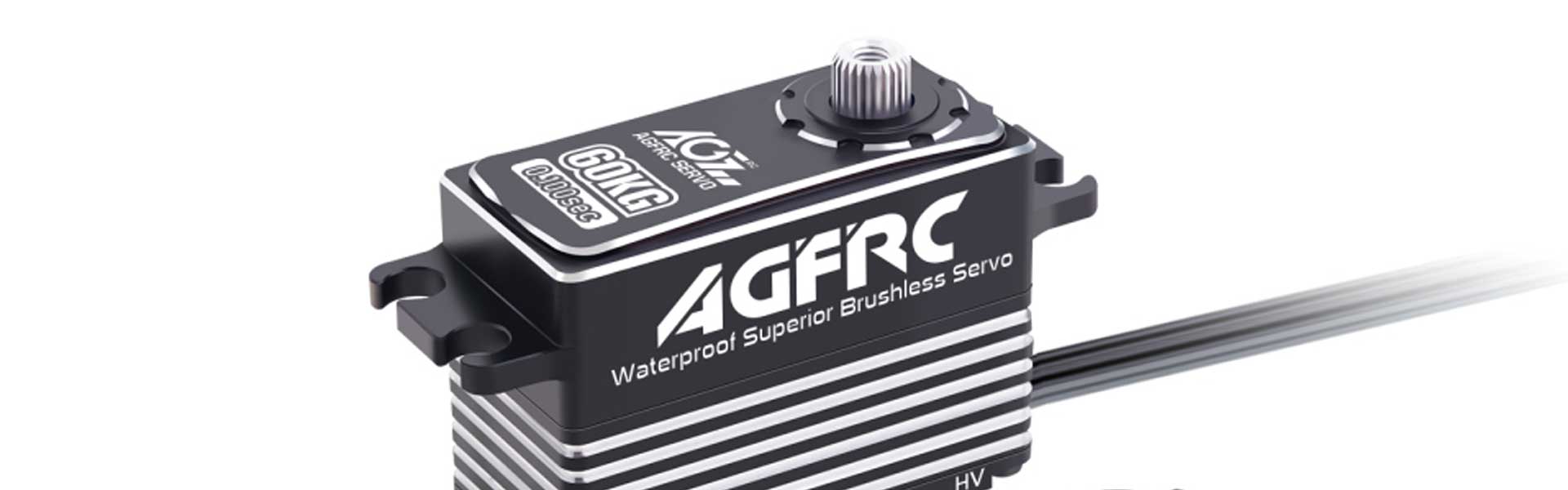
Anyone wishing to fit high-performance servos to their vehicles often needs to provide significantly more current than a standard BEC can supply. Some servos can draw as much as 10A. There are various ways of achieving this.
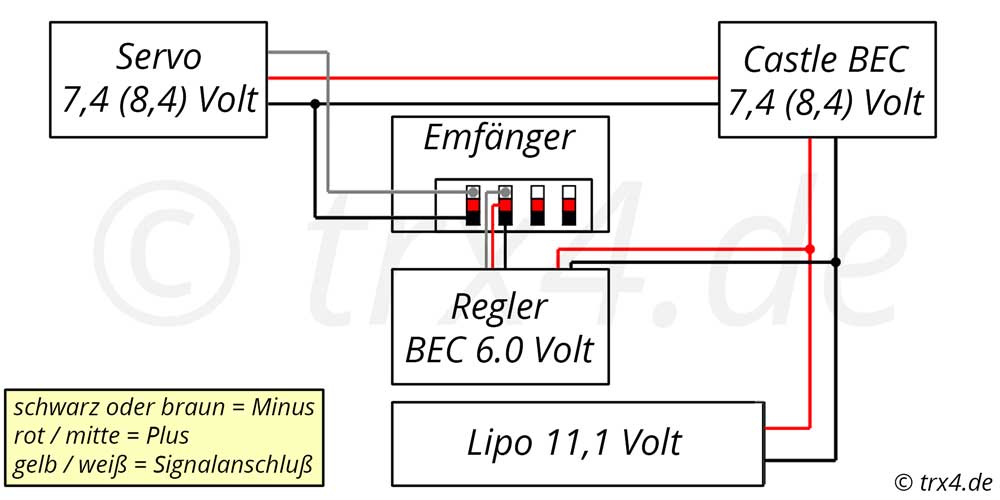 A very neat way of supplying the servo with the right voltage and current. A UBEC is available with 10 amps and adjustable voltages of 6.0 volts, 7.4 volts and 8.4 volts (among others). The BEC usually has an on/off switch which can also be used to cut the power to the servo.
If I connect a UBEC between the battery and the servo, the servo receives the required voltage and plenty of current so that it can show what it’s capable of. The receiver would continue to draw its voltage from the ESC, e.g. 6.0 volts, and all connected switching servos would remain safe. The disadvantage is that all loads on the receiver still have to make do with the power from the ESC. Another disadvantage is that you have to spend extra money on a BEC.
The positive cable from the servo must be disconnected (unclipped) on the receiver side
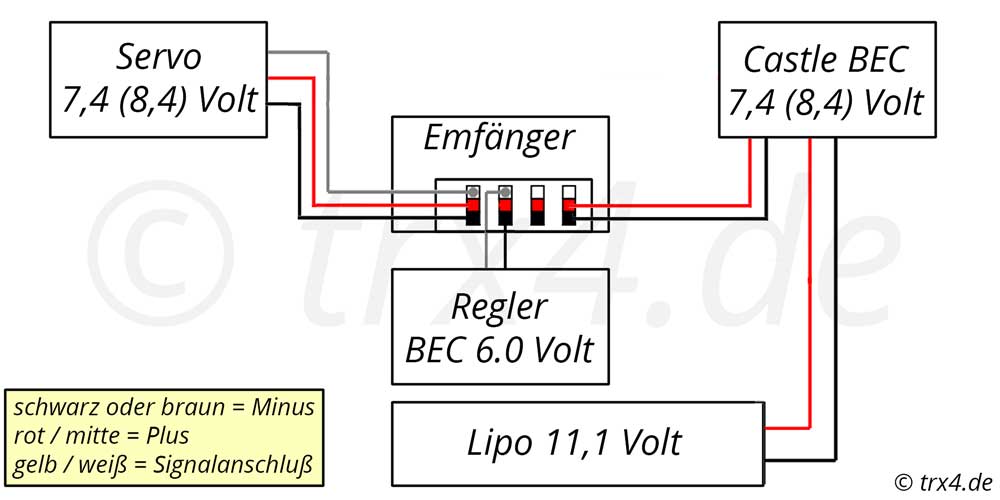 With this solution, the receiver is powered via an external UBEC; you set the desired voltage on the BEC. The receiver then receives a stable voltage, e.g. 7.4 or 8.4 volts, and full current, e.g. 10 amps. This ensures that even other power-hungry components on the receiver are well supplied.
The downside here is that many receivers cannot handle 8.4 volts, so you’ll have to make do with 7.4 volts; there’s also the issue of switch-mode servos if they can only handle 6.0 volts. Otherwise, it’s a very neat solution as you can switch the vehicle off completely using the ON/OFF switch on the BEC.
The positive cable from the ESC must be disconnected (unclipped) on the receiver side
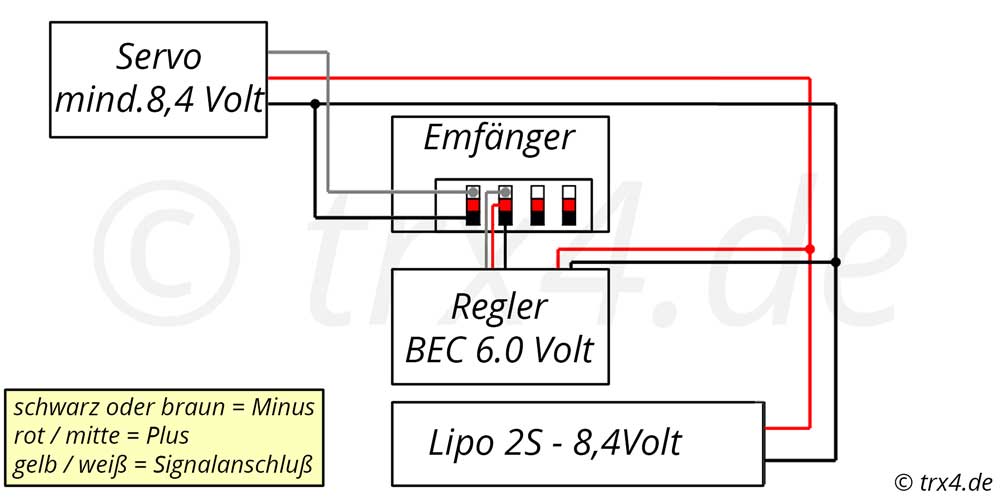 The cheapest and probably simplest solution. The servo draws its power directly from the battery – 8.4 volts for a 2S battery – so there’s no need to buy or fit anything extra. The servo also always receives plenty of current, even if it’s a bit power-hungry (high-performance servos). Here, you simply solder additional wires to the ESC connector, then connect the positive and negative terminals to the positive and negative terminals of the servo.
The disadvantage is that there is no protection whatsoever, and as soon as you connect the battery, the servo is supplied with power, regardless of whether the ESC has been switched on.
The positive lead from the Servo must be disconnected (unclipped) on the receiver side
As there has already been an enquiry:
The images used are from my own website (www.trx4.de) and may, of course, be used by me.