

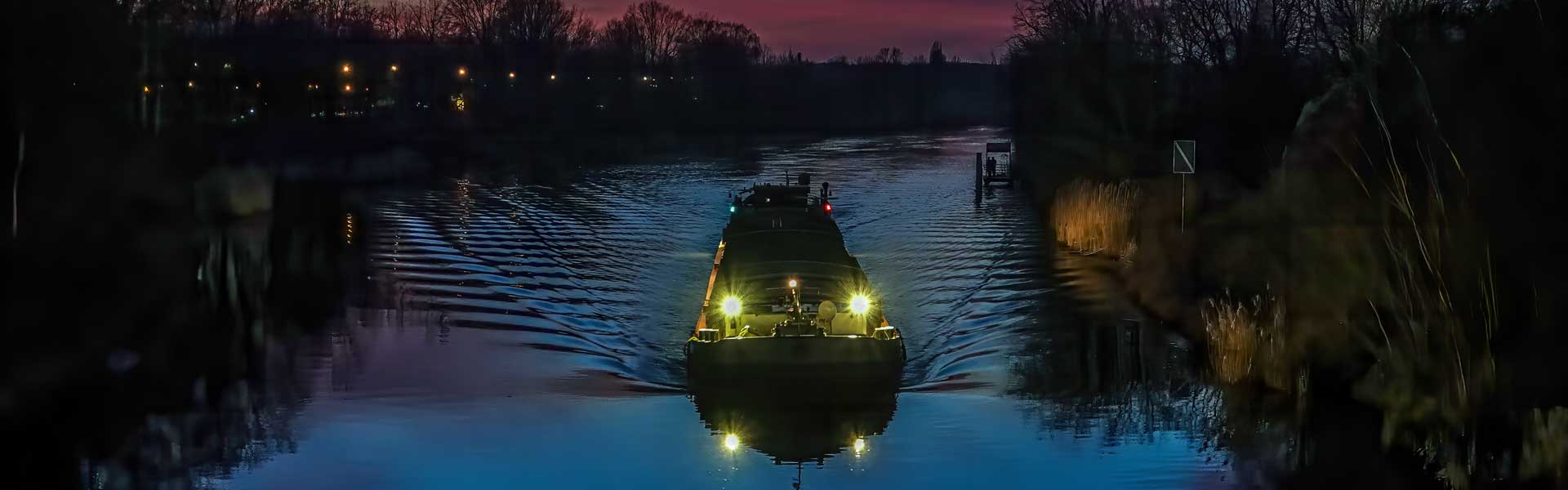
As people often wonder which lights should be fitted to a model boat and where they should be positioned so that they are visible at night, here is a brief explanation. These regulations apply to inland waterways.
On inland waterways, a distinction is made between ‘vessels’ and ‘small vessels’. Vessels less than 20 metres in length are also classified as ‘small vessels’. All ‘small vessels’ are also ‘vessels’; however, special regulations apply to small vessels in various areas (e.g. lighting arrangements, rules of way).
Vessels display certain visual markings by day and certain lights by night so that it is possible to identify the type of vessel, whether it poses any particular hazards, and whether special rules must be observed when encountering or overtaking it.
Quick search:
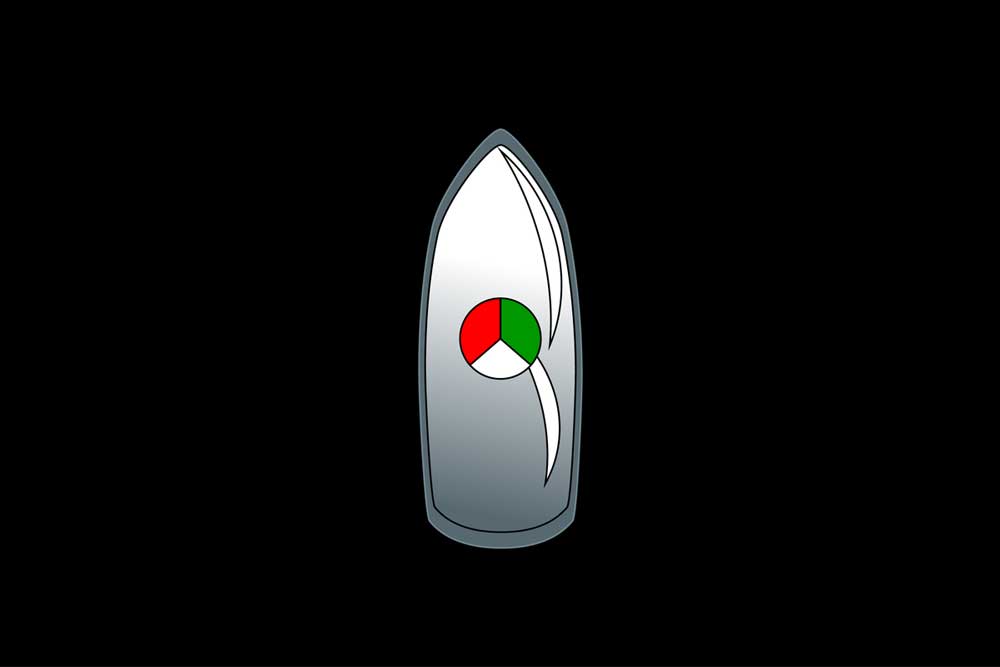
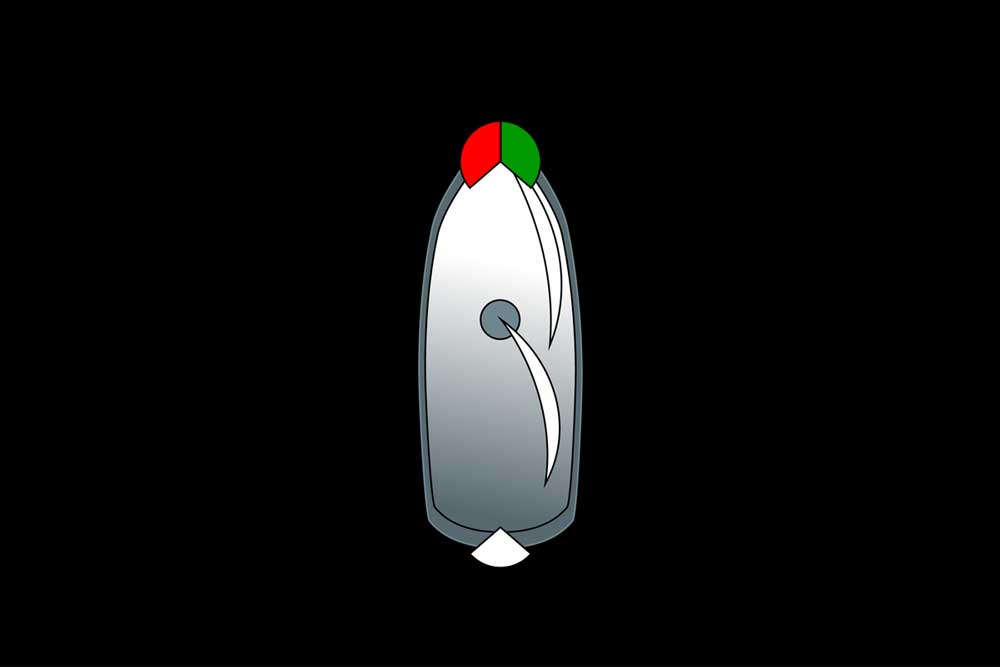
Either: a tricolour lantern at or near the top of the mast
Or: Side lights and stern light (no masthead light)
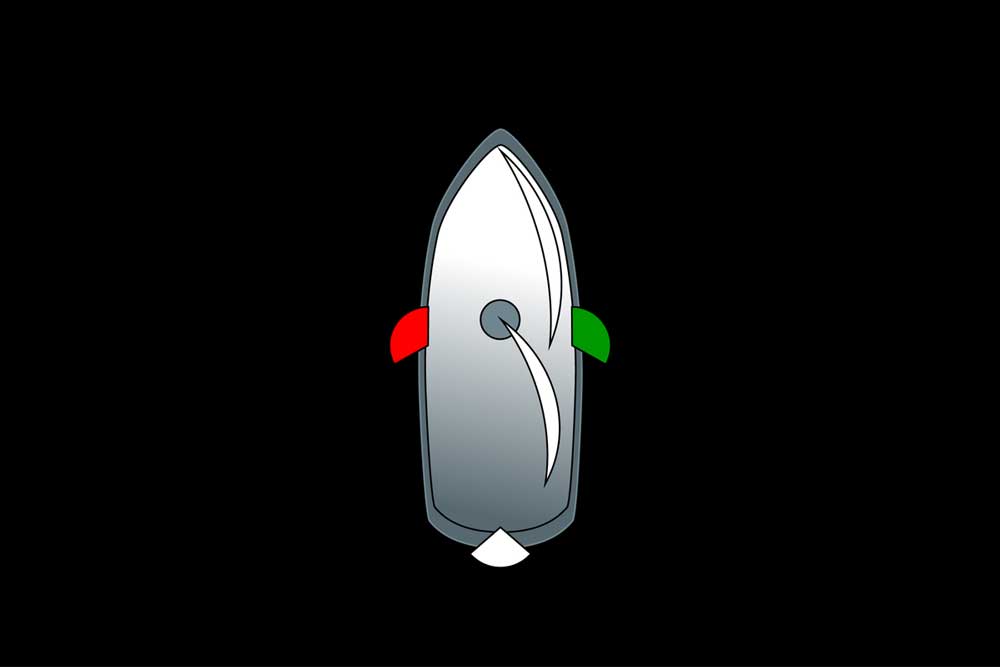
Or: Two-colour lantern and stern light (no masthead light)
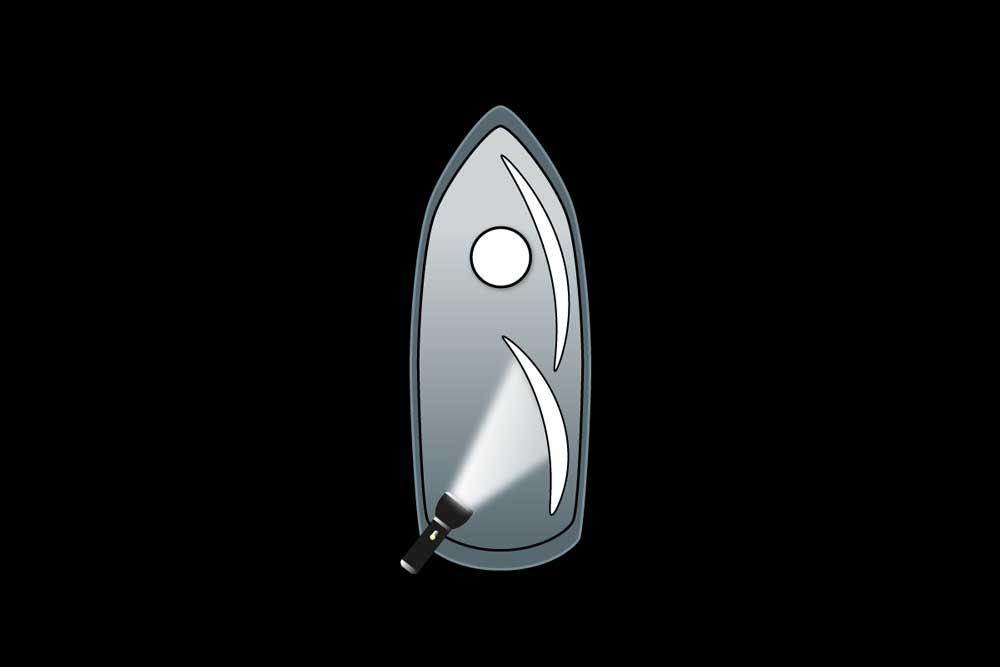
White rotating beacon and hand-held torch
Either: a three-colour lantern at or near the top of the mast
Or: Side lights and stern light (no masthead light)
Or: Two-colour lantern and stern light (no masthead light)
Sailing vessel under engine power (at night)
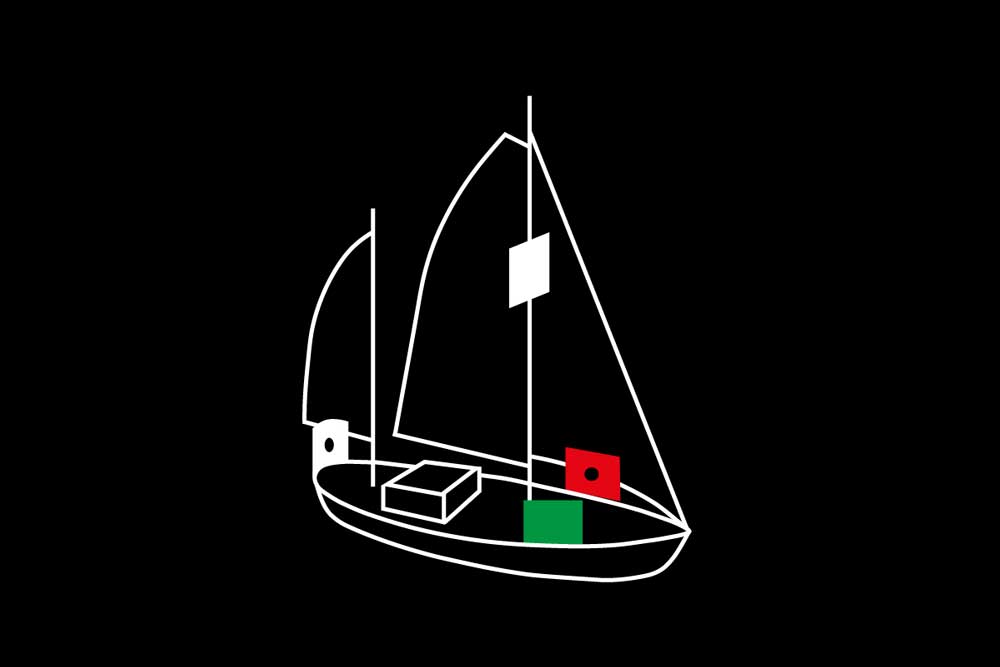
A sailing boat that is also propelled by a motor (either with sails set or under motor power alone) is regarded as a motorised vessel.
A sailing vessel under motor power must display the lights prescribed for a motorised vessel.
A black dot inside a rectangle indicates that, although a light is being displayed, it is not visible from this angle in the side view.
In the diagram above, as well as in reality, the port side light and the stern light cannot be seen from this perspective.
Up to 110 m in length, viewed from the front
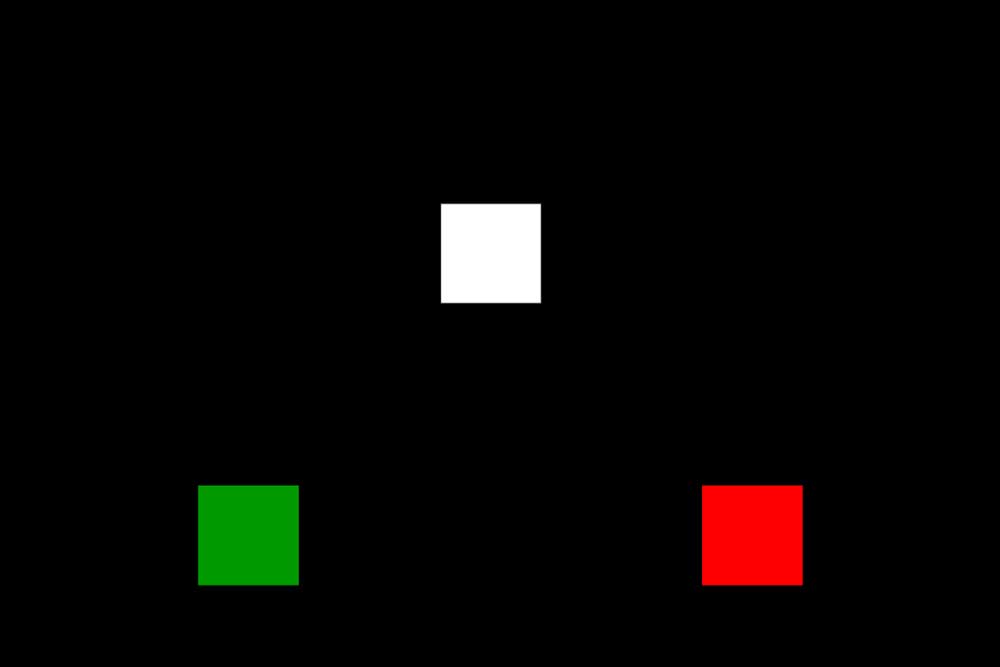
Longer than 110 m, viewed from the front
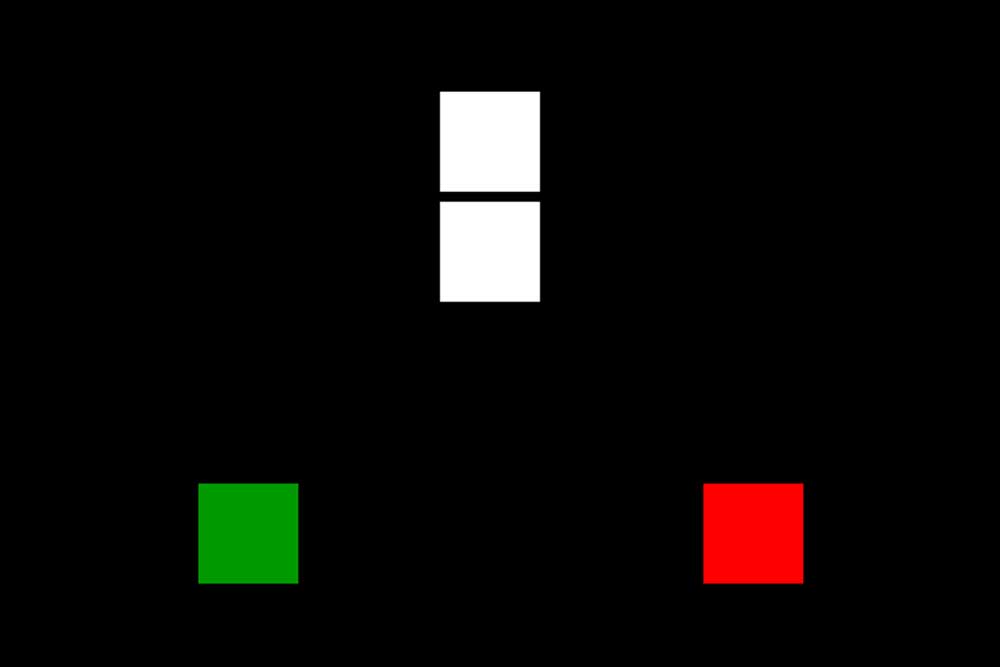
A push-boat convoy at night

Push-boat convoy underway, viewed from the front
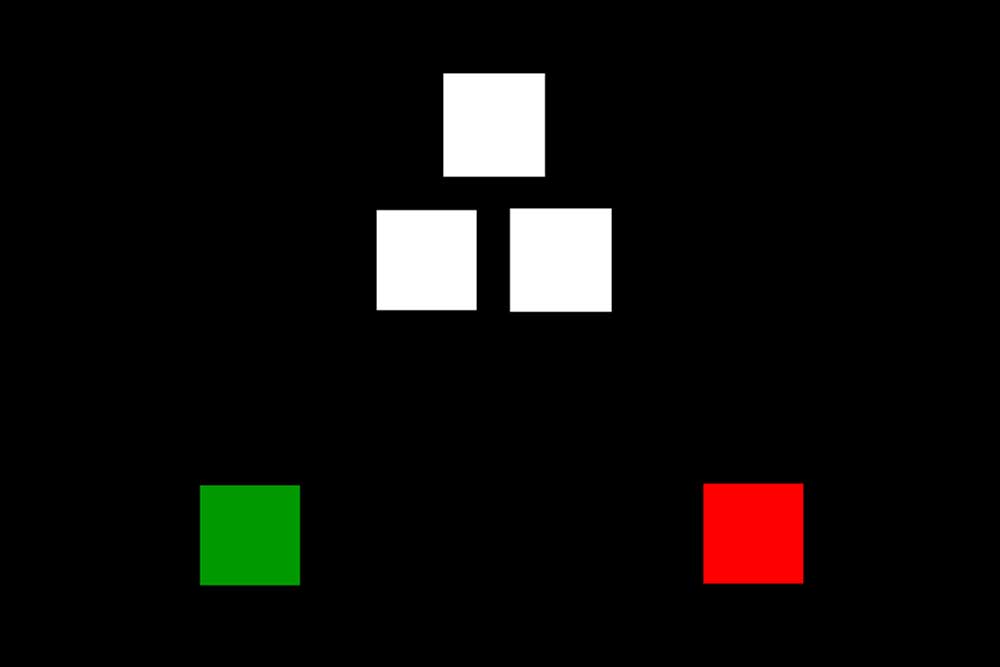
Push-boat convoy underway, viewed from behind

In a pushed convoy, boats without engines (known as barges) are coupled to a motorised pusher vessel.
If a push-boat convoy consists of a barge and a push boat, the lights are displayed as shown in the picture.
The push boat displays three white lights in a line at the stern.
What is a flashing light?
A flashing light is a light in which the duration of the flash is shorter than the periods of darkness between flashes.
A flashing light emits 40 to 60 flashes per minute. Flashing lights are used for communication between (large) vessels; sports and leisure craft (small vessels) are not required to react directly to these signals, but are obliged to exercise increased vigilance.
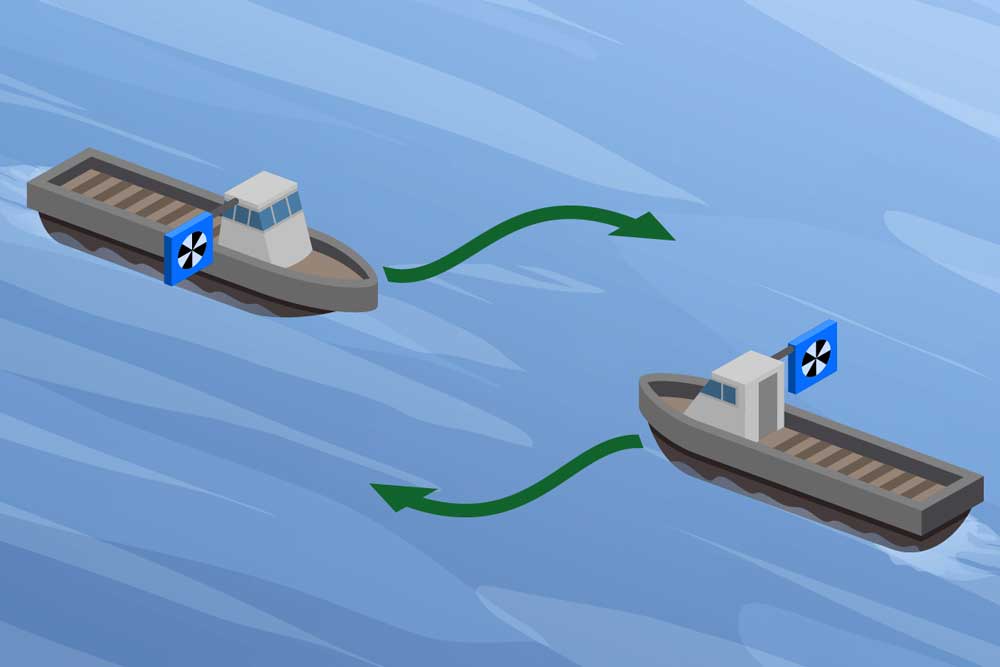
A flashing light is most commonly used to indicate a meeting between two vessels (excluding small craft) starboard to starboard (traffic on the left).
If a vessel displays a blue board with a white flashing light to another vessel on its starboard side, the vessels are to pass each other (the ‘encounter’) starboard to starboard. The other vessel confirms the starboard-to-starboard encounter by displaying a blue board with a white flashing light itself.
Blue panel with flashing light