


As people often wonder which lights should be fitted to a model boat and which need to be lit at night, here is a brief explanation. These guidelines are intended for use at sea.
A quick guide:
All motorised boats/vessels between 12m and 50m in length: 1 masthead light (white), side lights (red/green) and stern light (white). For vessels over 50m in length, two white masthead lights – one at the bow and one at the stern – with the forward light positioned lower than the aft light. You’ll find further details below.
Quick search::
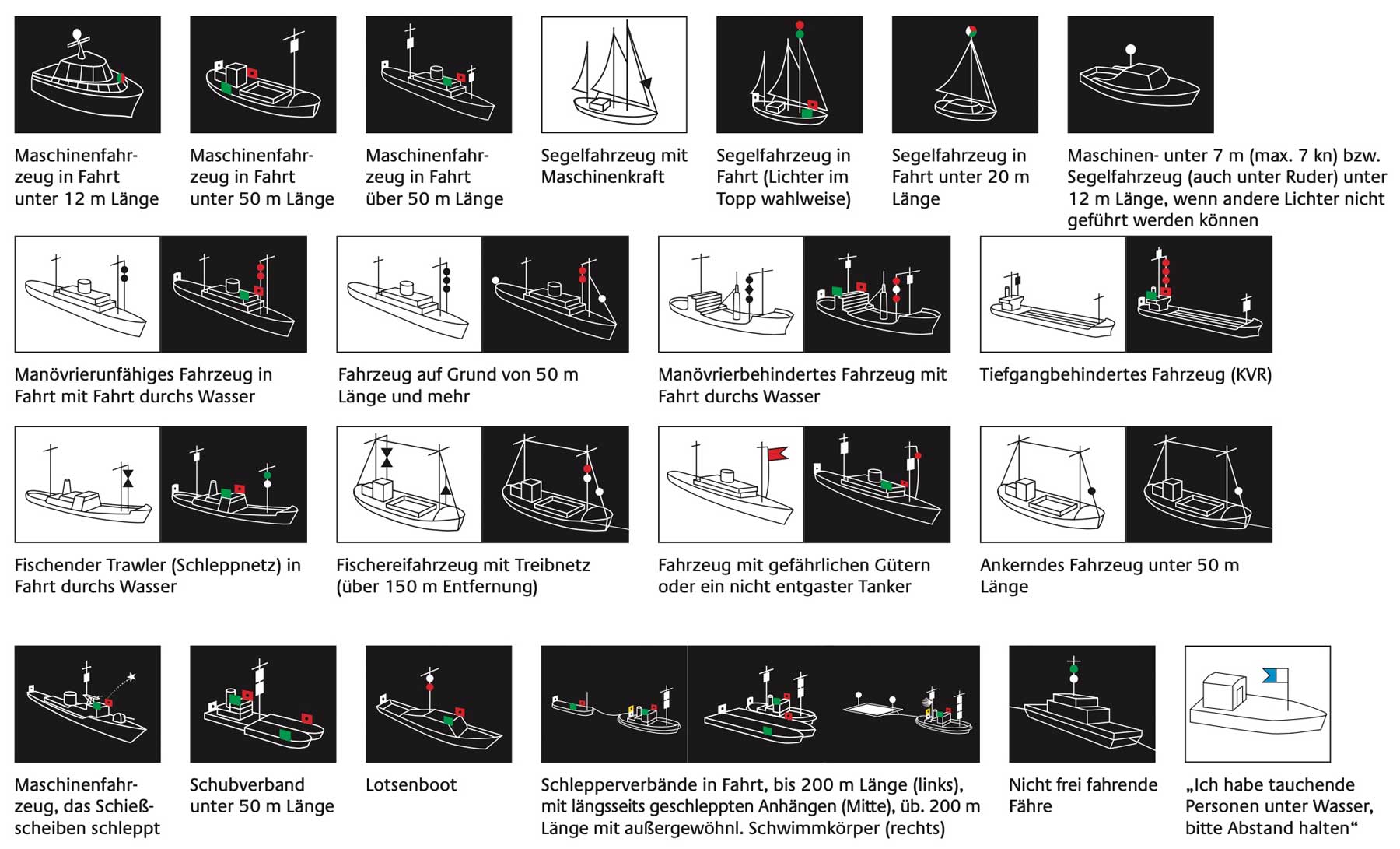 As shown in the example above, lights are depicted differently in the diagrams depending on their beam angle. Lights are shown in different colours as rectangles (with or without a black dot) or as circles.
A rectangle indicates that a light is emitted at a specific angle. This applies to the masthead light(s), side lights and the stern light.
A circle, on the other hand, indicates that the light is a rotating beacon, visible from all sides.
A black dot inside a rectangle indicates that a light is on, but is not visible from this angle in the side view.
In the diagram above, as well as in reality, the port-side navigation light and the stern light cannot be seen from this angle.
Vessel travelling through water
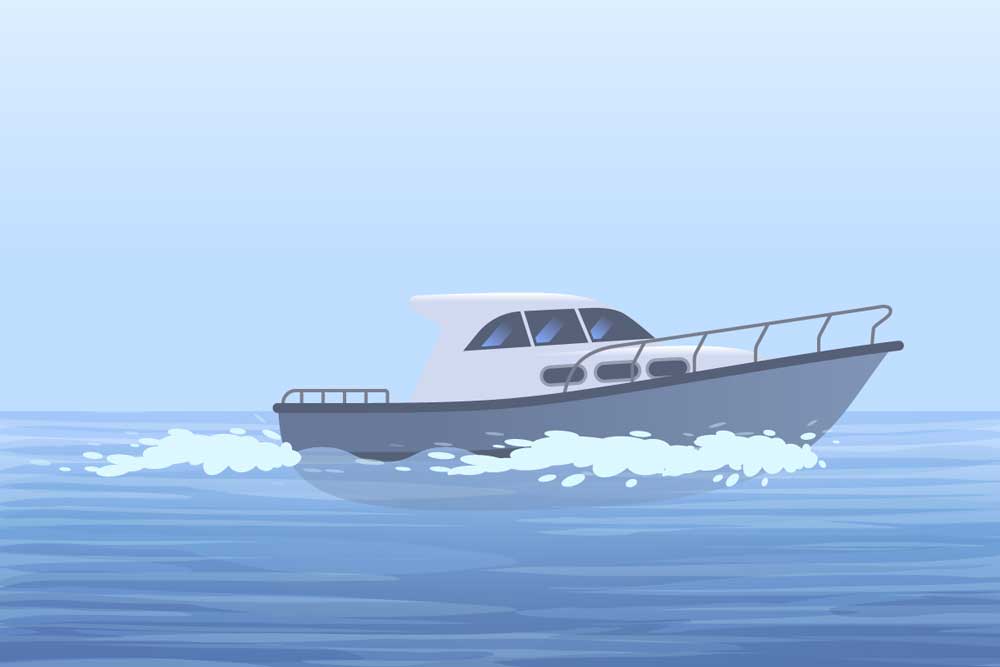 A vessel ‘moving through the water’ is a vessel that moves through the water under its own power (i.e. by means of an engine, sails or oars).
In summary, a vessel ‘moving through the water’ is always a vessel ‘under way’. Conversely, a vessel may be ‘under way’ without actually ‘moving through the water’ (e.g. if it is drifting).
Vessel in motion
 A vessel is considered to be under way if it is neither at anchor, nor moored to the shore, nor aground.
A vessel that is adrift (e.g. because its engine has failed or it has not dropped anchor) is therefore considered to be under way!
Vessel not in motion
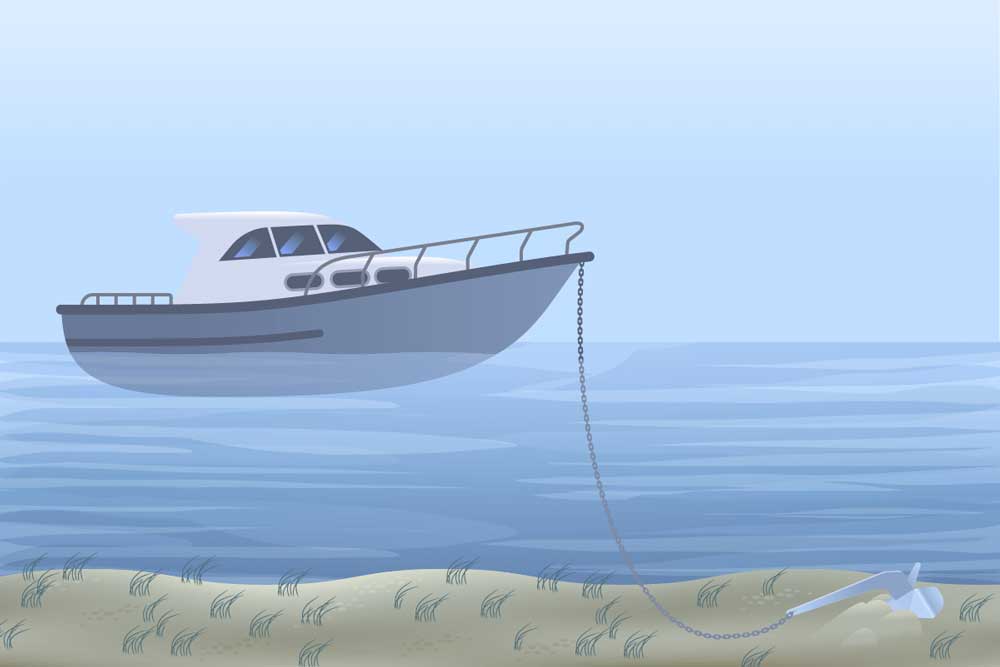

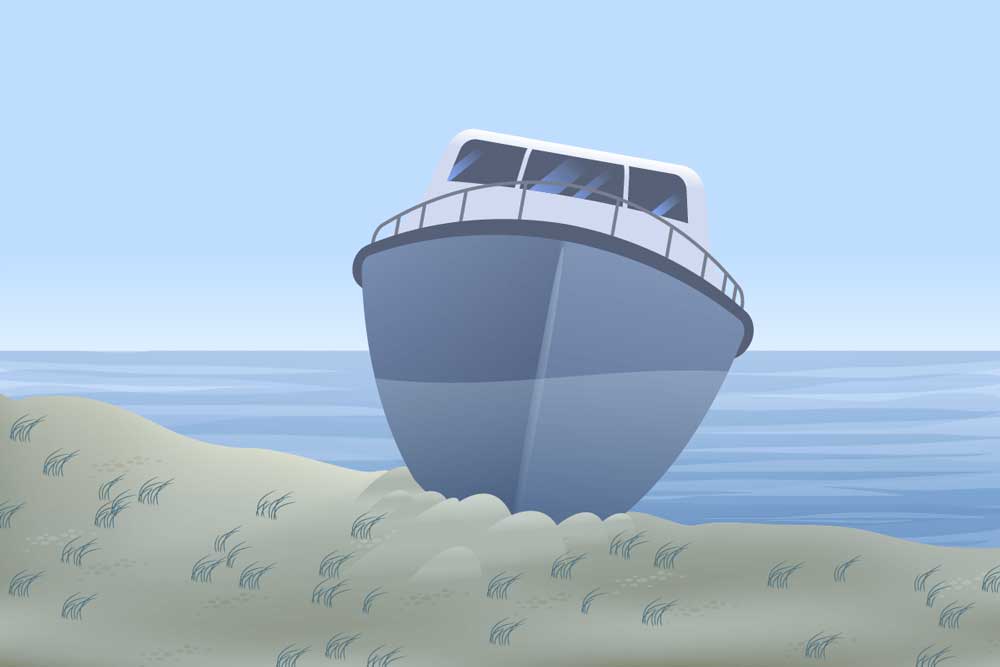 A vessel is not considered to be under way if it is at anchor, moored to the shore or aground.
Arten von Lichtern
 A distinction is made between the following lights:
Masthead light (white) with a beam angle of 225°: indicates that the vessel is a motor vessel. The masthead light is also colloquially referred to as a ‘steamer light’, as motor vessels were formerly powered by steam engines.
Side lights (one red on the port side and one green on the starboard side), each with a beam angle of 112.5°, indicate the two sides of the vessel.
Stern light (white), which shines aft at an angle of 135°.
All-round lights (red, green or white), which are visible from all sides at an angle of 360°, are used in various combinations to indicate the type of vessel and/or its state of motion.
Motor vehicle in motion, less than 50 m in length
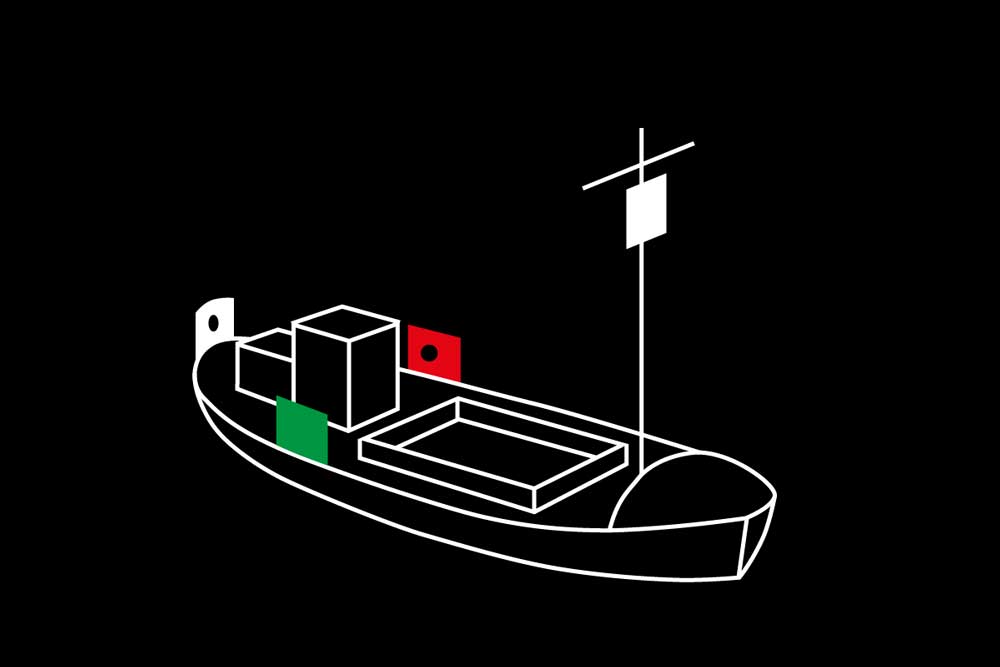 A motorised vessel under way at night displays the following lights:
Masthead light
Side lights
Stern light
A motor vehicle in motion, probably 50 metres or more in length
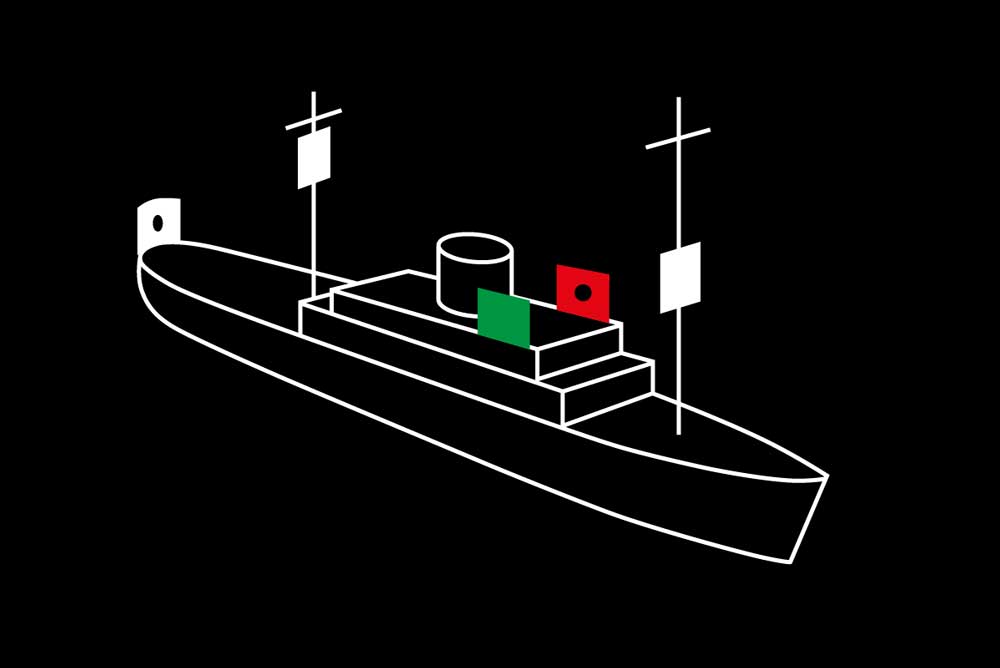 A motorised vessel under way at night displays the following lights:
Masthead light(s)
Side lights
Stern light
Motor vehicle in motion, less than 12 metres in length
 A motorised vessel less than 12 metres in length may, instead of the masthead light and the stern light, carry a white all-round light and may also combine the side lights into a two-colour lantern. A two-colour lantern is defined as a light that emits red light to port and green light to starboard. Stern light
Motor vehicle in motion, less than 7 m in length
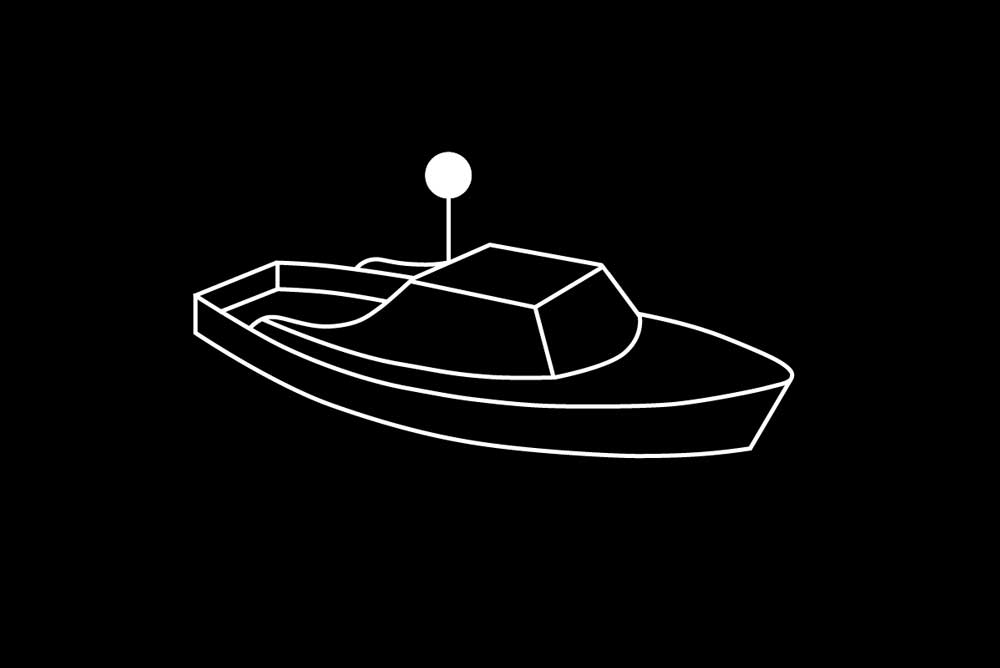 A motorised vessel under way, less than 7 metres in length and with a maximum speed not exceeding 7 knots, may also display only one white all-round light, unless it is otherwise practicable.
A sailing boat underway
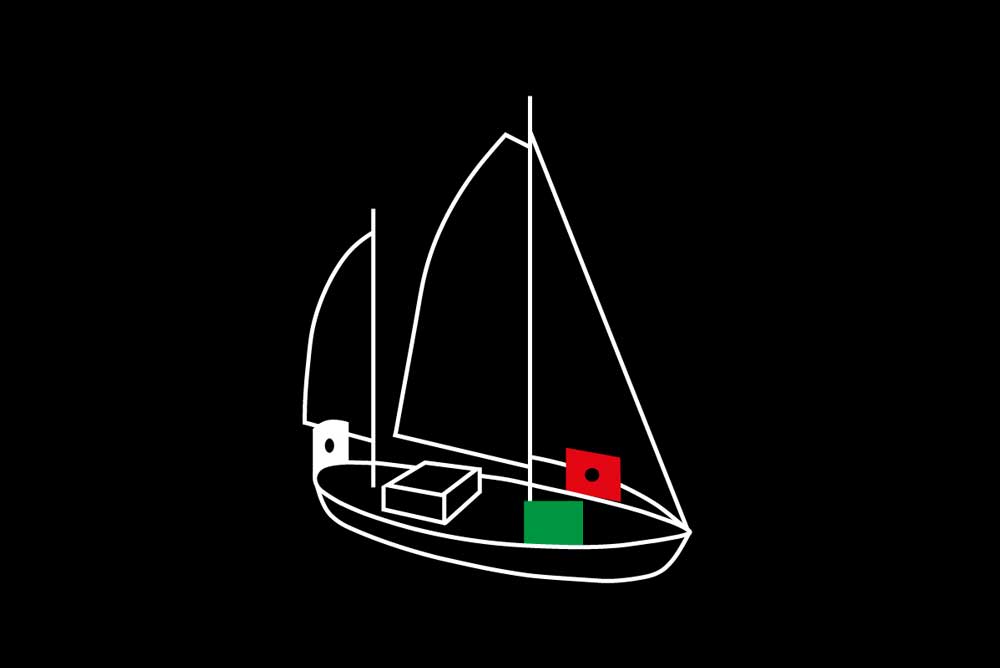
A sailing vessel under way at night displays the following lights:
Side lights
Stern light
It therefore does not display a masthead light, which clearly distinguishes it from a motor vessel.
Sailing vessel under way (traditional sailing ship with additional lights)
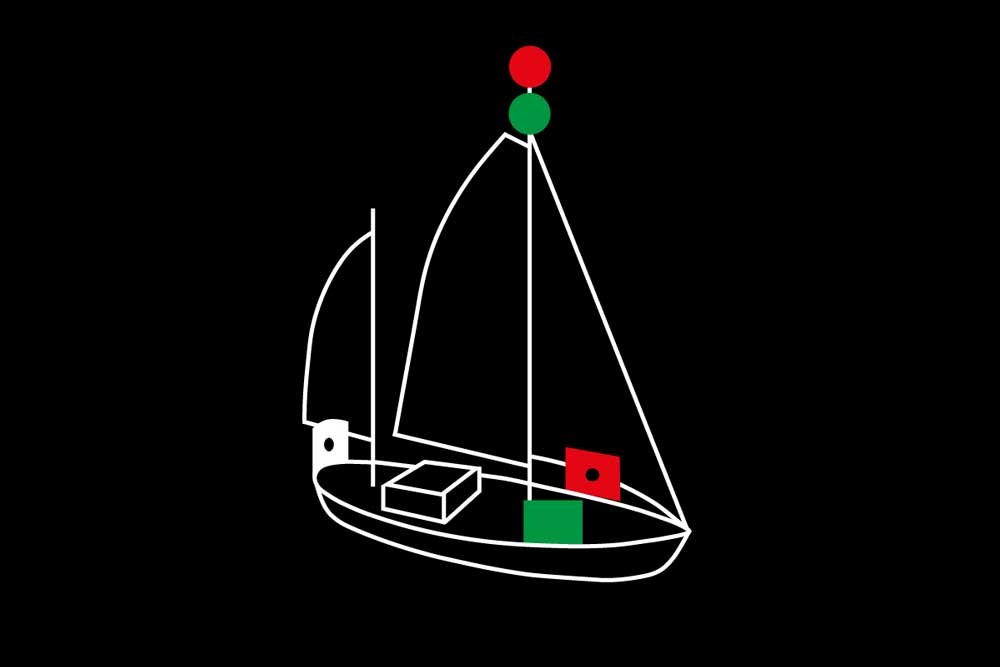
A sailing vessel may also display red-over-green all-round lights at the top of the mast. To illustrate the dimensions of the sailing vessel, these additional lights are used in practice by traditional sailing ships.
A sailing vessel under power, less than 50 m in length
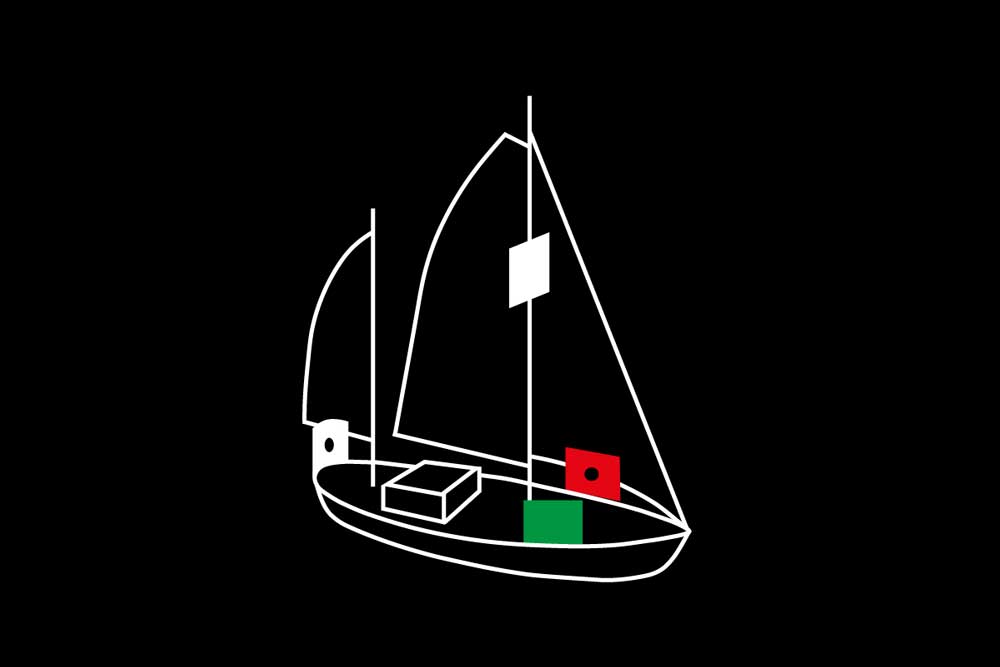
A sailing vessel under way whilst simultaneously using its engine is regarded as a motor vessel, whether or not its sails are set. At night, it must display the lights of a motor vessel of the corresponding size. By day, whilst sailing with sails set and the engine in use, it must display a cone pointing downwards, which is clearly visible at the bow.
Sailing vessel under way, less than 20 m in length
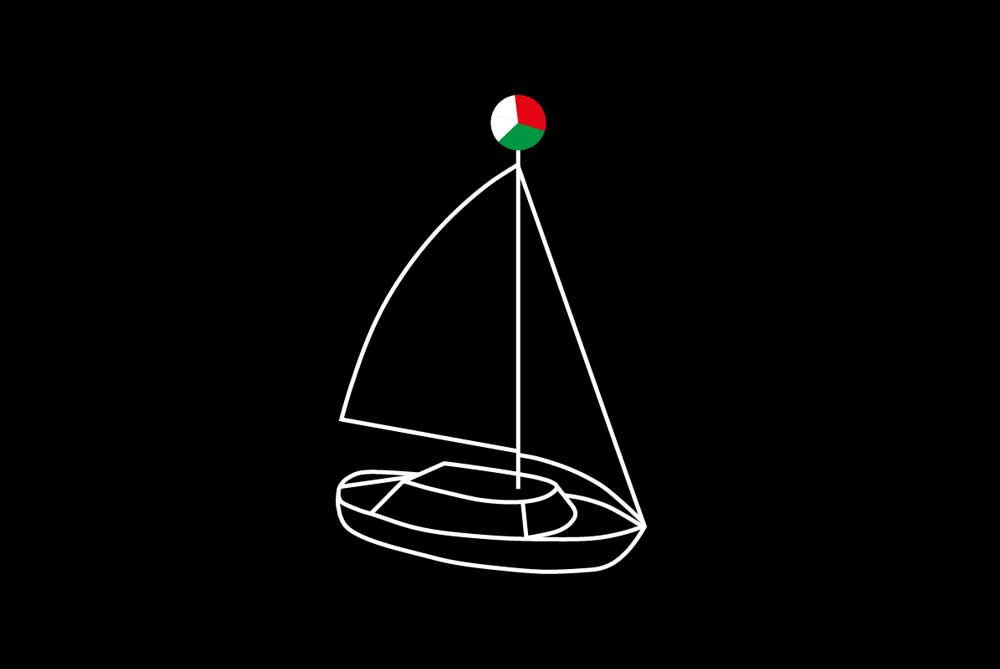
A sailing vessel under way that is less than 20 metres in length may combine its sidelights and stern light into a single tricolour lantern and carry this lantern at or near the top of the mast. A tricolour lantern is defined as a light that emits red towards the port side, green towards the starboard side and white towards the stern.
Trawler: Using a trawl net

A trawler is a vessel that tows a trawl net or other fishing gear through the water.
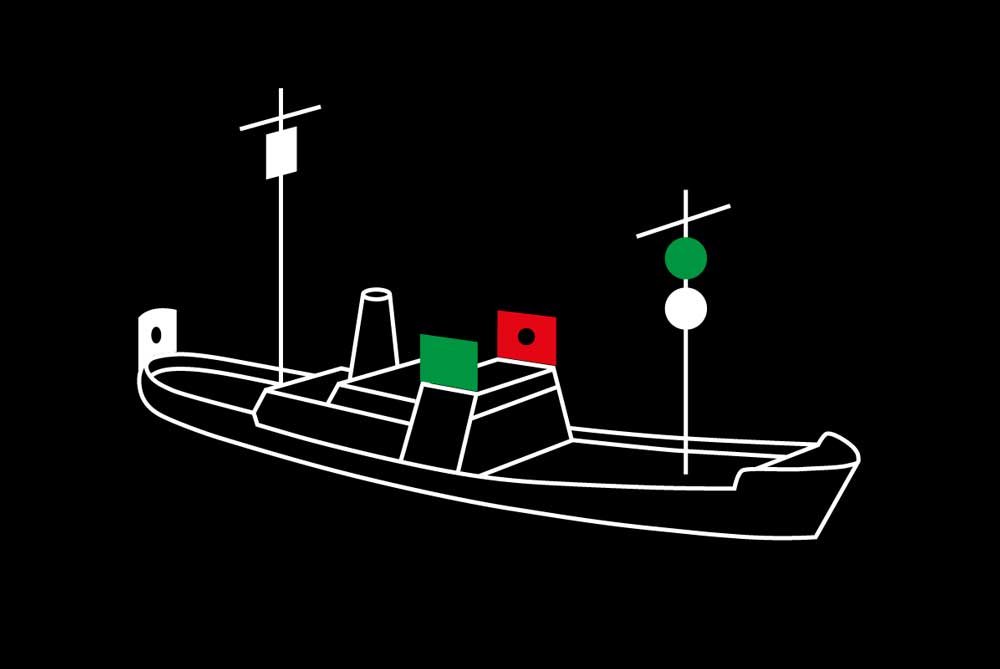
A trawler under way, with a length of 50 metres or more
A trawler under way at night displays the following lights:
Two all-round lights, ‘green over white’
A masthead light, aft of and higher than the green all-round light, for vessels over 50 metres in length
Side lights
Stern light
Non-trawling fisherman: without a trawl net
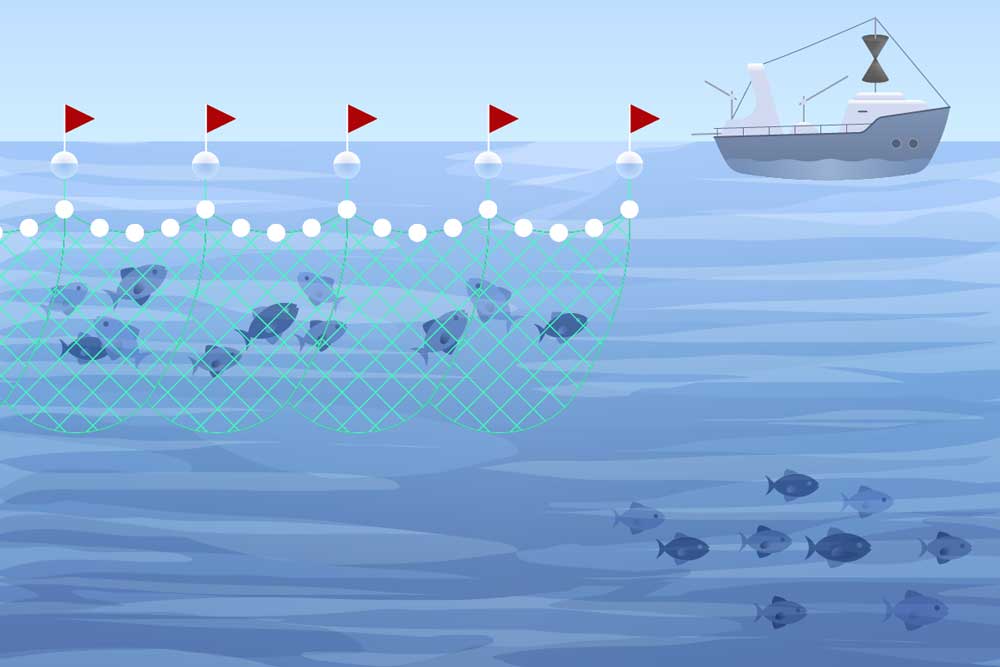
A non-trawling fishing vessel is one that does not drag a trawl net through the water, but instead generally drifts. Such a vessel uses, for example, a drift net as its fishing gear.

Non-trawling fishing vessel underway or at anchor (e.g. drift-net fisherman shown here at anchor):
Two all-round lights “red over white”
Please note: A fishing vessel only displays side lights and a stern light once it is “underway through the water”.
Mnemonic for the light signals of a vessel engaged in fishing:
‘Green over white’ and "Red over white, fishing at night."
Is the vessel trawling? According to the traffic light principle, ‘green (over white)’ means ‘Yes’ and ‘red (over white)’ means ‘No’
A towage convoy with limited manoeuvrability, 200 metres in length or less, under way

Lighting configuration of a tug whilst underway:
Two masthead lights one directly above the other (in place of the single masthead light or the second masthead light of a motor vessel)
Three masthead lights one directly above the other, if the tow is longer than 200 metres (length from the stern of the tug to the stern of the (last) vessel in the tow)
Side lightsr
Stern light
Yellow towing light positioned vertically above the stern light (thereby marking the towing convoy and the towline, which is not visible at night, even from the stern light sector)
Additional lights on a vessel with restricted manoeuvrability, if the convoy is significantly impeded from deviating from its course.
A towage convoy with limited manoeuvrability, over 200 metres in length, under way

Lighting configuration for a towed convoy whilst underway:
Side lights
Stern light
Mnemonic for the lighting configuration of a towed convoy:
There are always at least two vessels in a towed convoy, which is why the tug carries at least two masthead lights, one above the other, at night. For longer towed convoys (> 200 m), there are accordingly three masthead lights.
In addition, the ‘yellow towing light for the yellow angels’, as the towing aid is known in road traffic
Vessels at anchor less than 50 m in length

Vessels at anchor measuring 50 metres or more in length
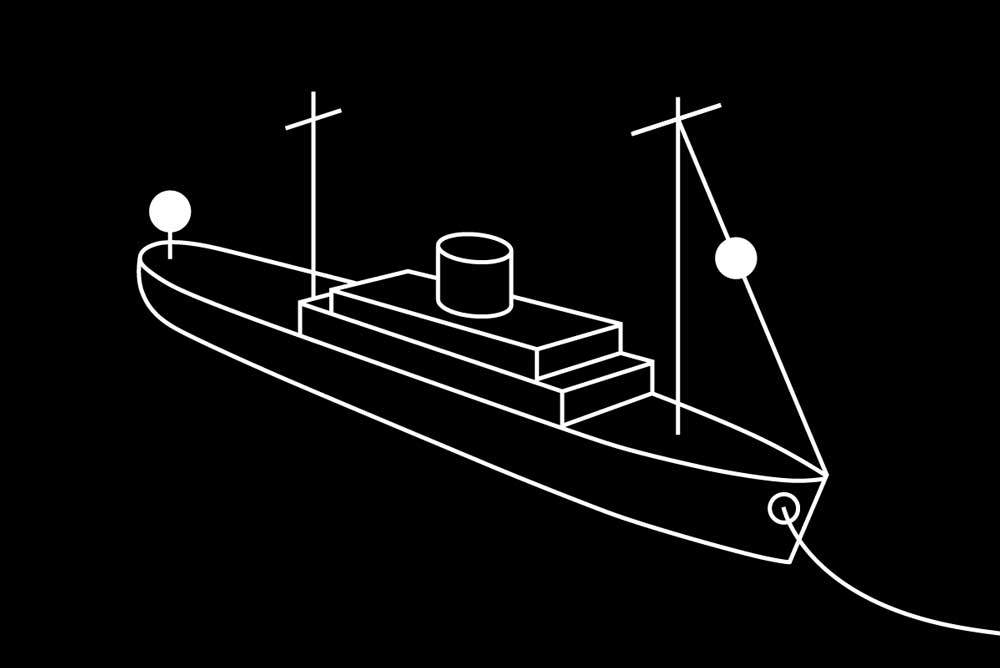
Anchored vessels 100 metres or more in length

Lighting arrangement of an Anchored vessels
Less than 50 metres in length: one white all-round light at the front of the vessel.
50 metres or more in length: two white all-round lights, one at the front and one at the rear of the vessel. The light at the front must be positioned higher than the light at the stern. (To avoid confusion with a vessel under way, the positioning is therefore the opposite to that of the masthead lights on a vessel under way.)
100 metres or more in length: in addition to the two all-round lights, the deck lights must also be switched on. (Deck lights do not shine outwards, but illuminate the deck of a vessel. This makes the hull and the dimensions of the vessel recognisable.)
Vehicle travelling whilst unable to manoeuvre (e.g. if the engine has failed)
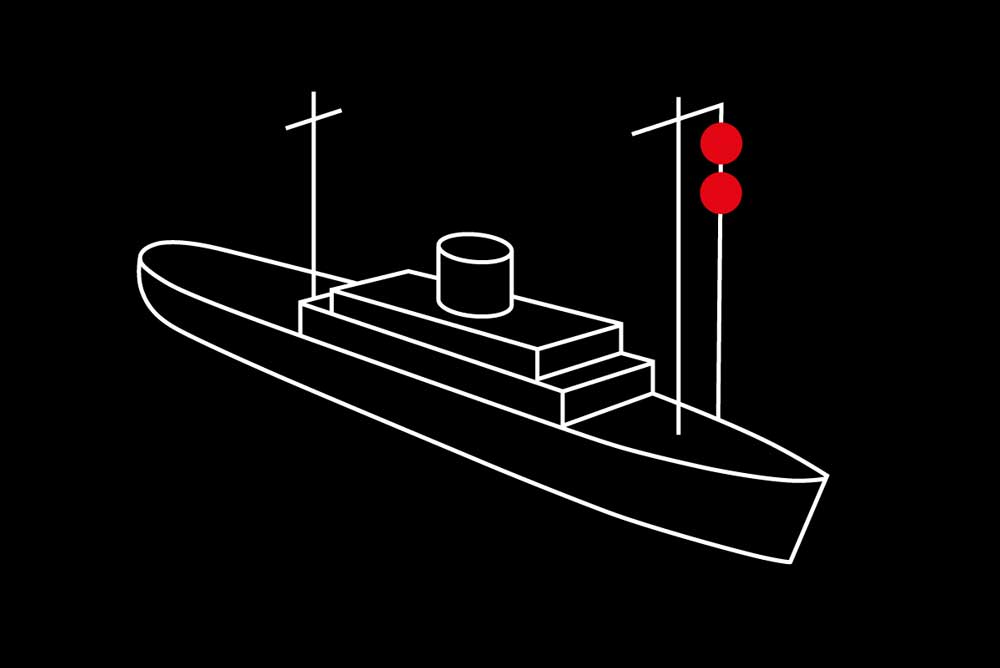
Whilst underway: two balls, one directly above the other
At night whilst underway: two red all-round lights, one directly above the other
At night whilst underway through water: additional side lights and a stern light. (Note: No masthead light, to avoid confusion and to further highlight any failure of the steering or engine systems.)
Vessel unable to manoeuvre whilst travelling through the water (e.g. where the engine can still be used for propulsion but the steering system has failed)
